
For many independent developers, building a good game is no longer the hardest part. Standing out in a crowded market is. As distribution platforms grow and discovery becomes more algorithm-driven, visibility is increasingly shaped by systems developers don’t directly control.
Today, success rarely comes from isolated social media posts or last-minute launch announcements. Instead, it depends on understanding demand early, aligning messaging with platform mechanics, and measuring what actually moves players from awareness to action.
This guide outlines a practical, data-informed approach to indie game marketing, from early validation to launch execution, with a focus on decisions that reduce risk rather than amplify noise.
Market Validation Before Development
One of the most common challenges in indie game marketing appears before development even begins. Games are often built around strong creative ideas without clear evidence of existing demand. Before committing significant time and resources, it helps to evaluate the market landscape with the same care used for production planning. This does not mean chasing trends blindly, but understanding where supply outweighs demand and where meaningful gaps still exist.
Looking at genre saturation, release frequency, and revenue distribution across similar titles provides early signals. Some categories are highly competitive but shallow in differentiation. Others are smaller yet underserved, offering room for well-positioned projects. Tools like Datahumble are often used at this stage to review genre medians, tag-level competition, and historical performance patterns. This kind of validation does not replace creative vision, but it can help refine scope and expectations before development locks in.
Building a Strong Steam Store Presence
For most indie titles, the Steam store page is the central conversion point. Regardless of where traffic originates, this page determines whether interest becomes a wishlist or a sale.
Effective indie game marketing treats the store page as a funnel rather than a brochure. Visual clarity, messaging focus, and correct positioning matter more than volume alone.
Capsule image and first impression
The capsule image is often the first asset players see. Its role is not to explain everything, but to communicate genre, tone, and quality at a glance. If the image feels unclear or unpolished, players tend to assume the same about the game.
Testing variations and checking readability at small sizes can significantly improve click-through performance.
Trailers and early engagement
Trailers perform best when they show gameplay immediately. Players typically decide whether to continue watching within the first few seconds. Leading with mechanics instead of logos or long intros helps set expectations quickly and reduces bounce.
Tags and discoverability
Steam’s recommendation systems rely heavily on tags. Choosing precise, genre-defining tags helps the algorithm connect the game with players already interested in similar experiences.
Rather than maximizing the number of tags, effective indie game marketing focuses on relevance. Reviewing which tags are consistently used by top-performing titles in the same niche can clarify what the algorithm already associates with that audience.
Measuring Social Media Impact Beyond Clicks
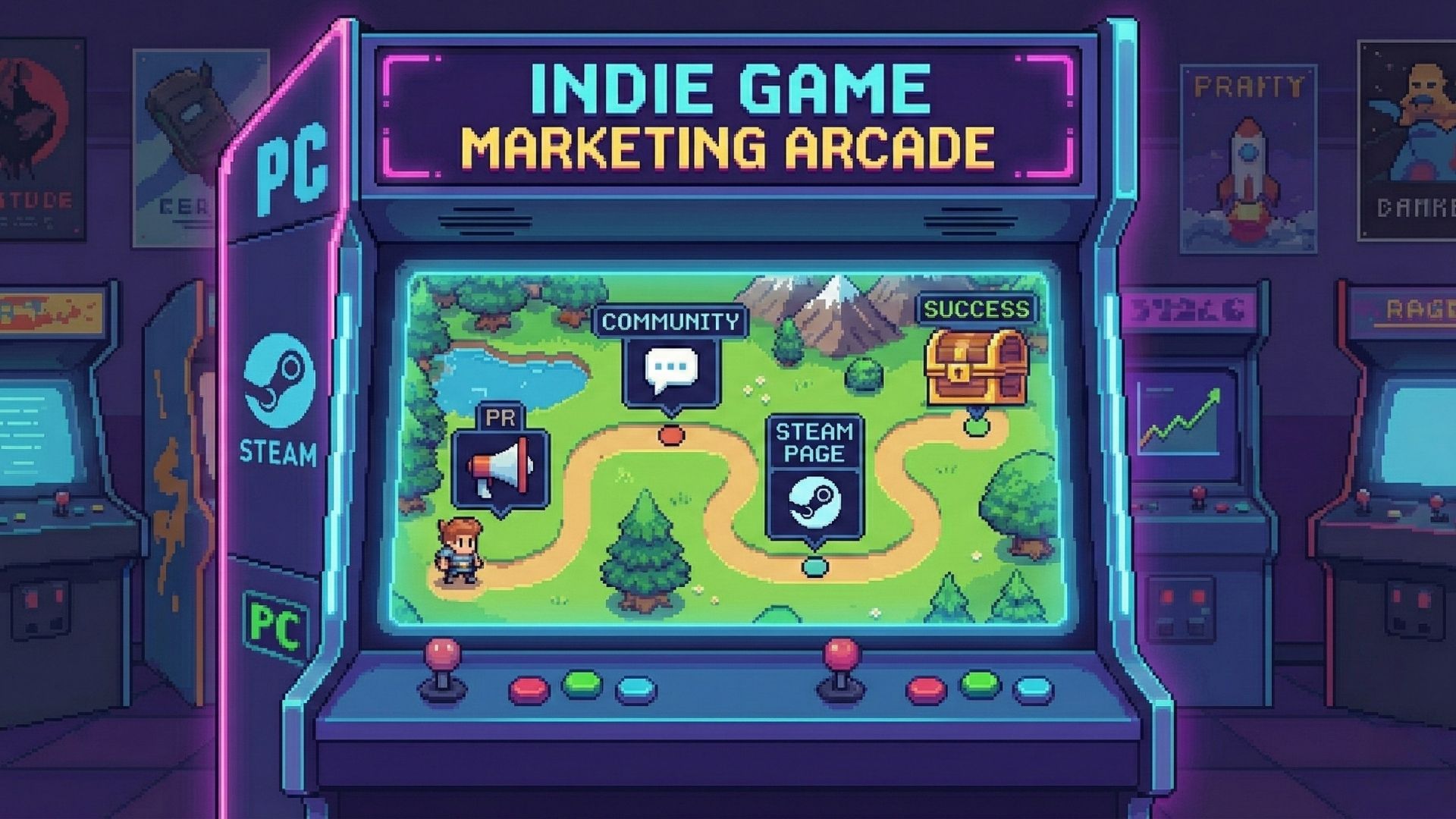
A recurring challenge for indie developers is understanding how social media activity translates into actual results. Players often discover games on mobile platforms but complete purchases days later on desktop, making direct attribution difficult.
This disconnect can create the false impression that certain channels underperform, even when they contribute significantly to demand.
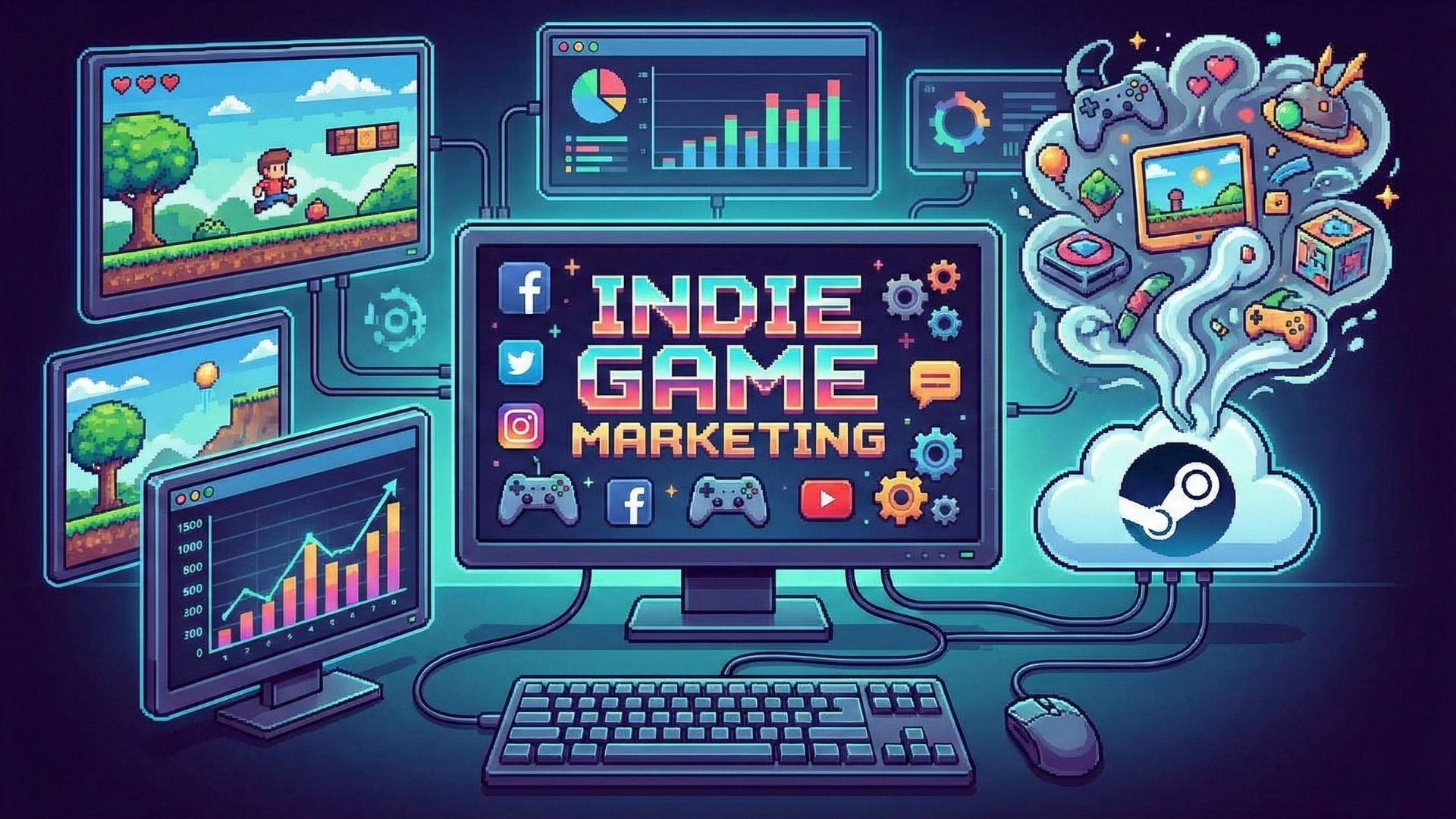
Bridging this gap requires looking beyond direct clicks. Tracking changes in wishlist velocity, correlating social spikes with store activity, and using consistent tracking parameters can provide a more realistic picture of performance.
Wishlist Velocity and Algorithm Signals
In the context of indie game marketing, total wishlist count is less informative than how quickly wishlists are added. Steam’s discovery systems respond more strongly to recent momentum than long-term accumulation.
Sudden increases in wishlist velocity often trigger additional organic visibility, especially around launch windows. Conversely, launching a store page without traffic can work against visibility by signaling low engagement.
Coordinating announcements, demos, and press outreach so that traffic arrives in concentrated bursts helps align external promotion with algorithmic signals.
Influencer Collaboration in a Fragmented Landscape
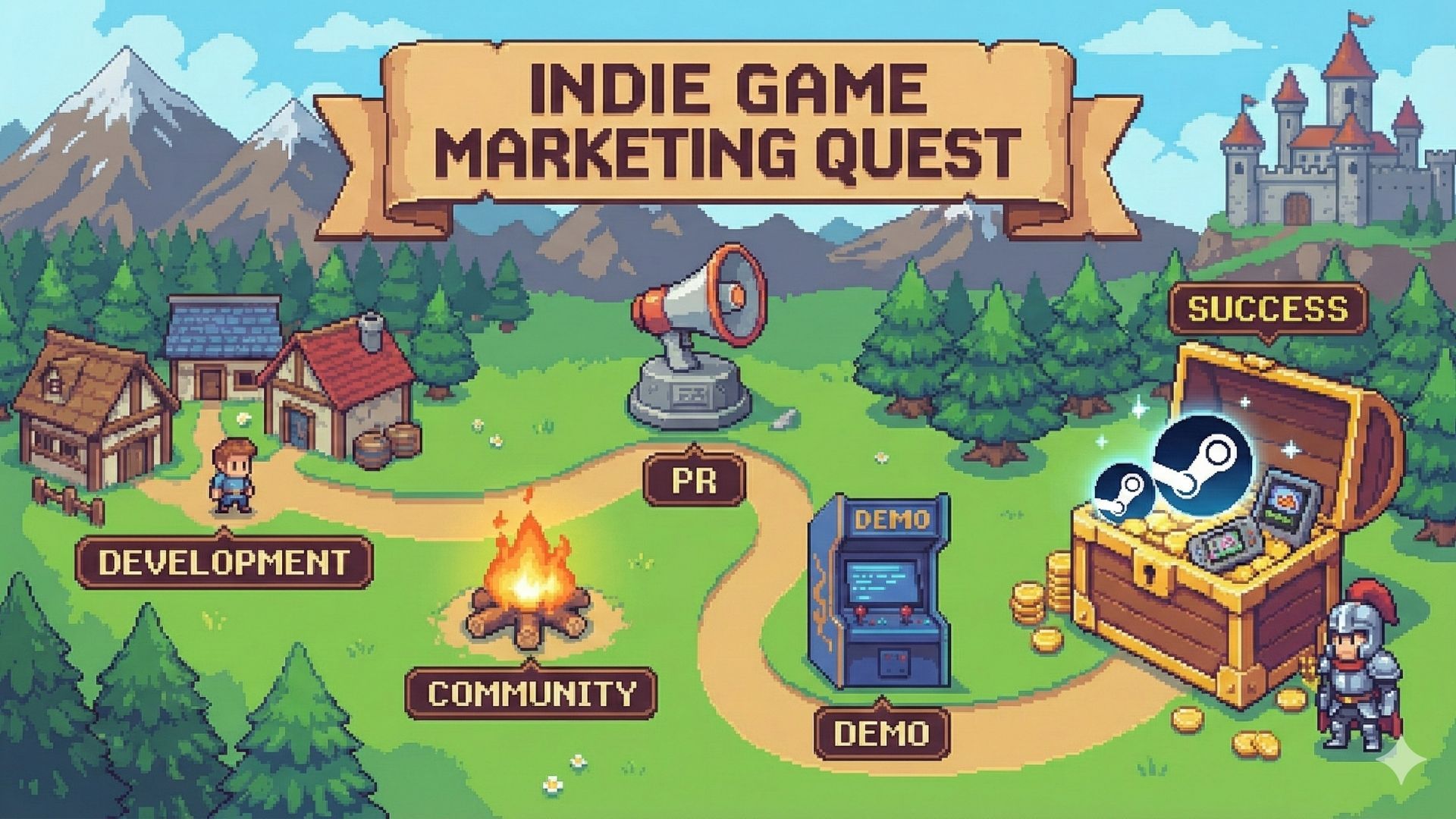
Influencer marketing has become more specialized over time. Broad, variety-based coverage often delivers limited returns, while niche creators tend to convert more effectively.
Educational channels, genre-focused curators, and creators who document development processes often reach audiences already predisposed to engage deeply with specific types of games.
Instead of prioritizing follower counts, effective indie game marketing evaluates relevance, engagement quality, and audience alignment. Data-driven tools can help identify creators whose content consistently resonates within a genre, reducing guesswork when forming partnerships.
Pricing and Global Launch Considerations
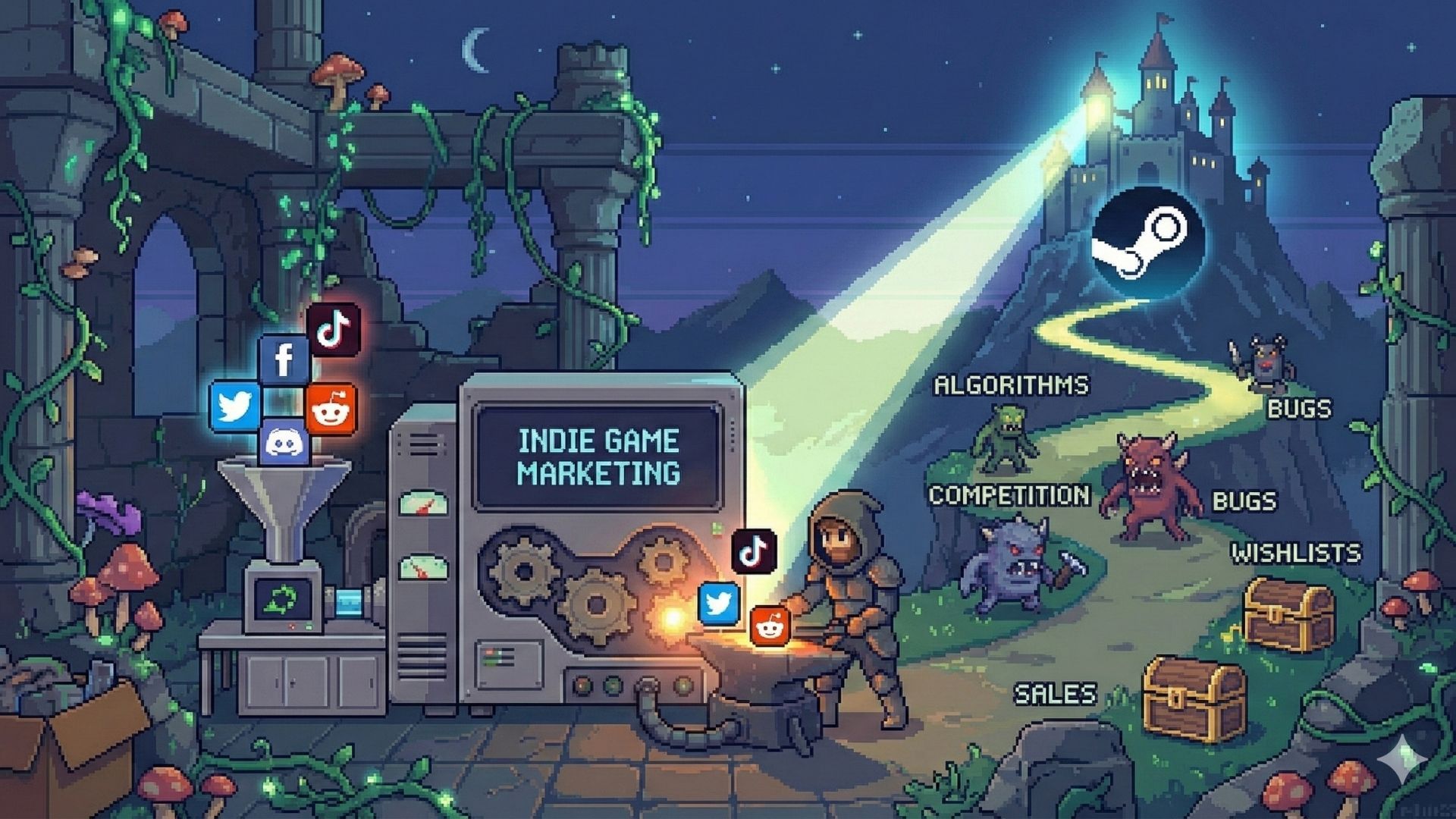
Price communicates value long before a player reads reviews. While pricing decisions deserve their own deep analysis, from a marketing perspective, the key is consistency between price, presentation, and audience expectations.
Regional pricing adds another layer. Automatic conversions do not always reflect local purchasing power, and small adjustments can significantly affect unit sales in price-sensitive regions without diluting global positioning.
Launch timing also plays a role. Releasing during major sales events or alongside high-profile titles can limit exposure, even for well-prepared games. Selecting a quieter window often improves initial discoverability.
FAQs About Indie Game Marketing
- What matters more than follower counts?
Engagement quality and wishlist velocity tend to be stronger indicators of launch performance than raw audience size.
- Is paid advertising necessary?
Many teams delay paid spend until organic interest is validated. This reduces wasted budget and clarifies which messages resonate naturally.
- Does every game need TikTok or Shorts?
Not every genre performs equally well, but short-form video has become a primary awareness channel for many players. Testing early helps determine fit.
Data-Informed Indie Game Marketing with Datahumble
Indie game marketing is less about creating noise and more about reducing uncertainty. By validating demand early, aligning store presentation with audience expectations, and measuring what actually drives engagement, developers can approach launches with greater confidence.
Data does not replace creativity, but it provides context. Used thoughtfully, it turns marketing from a gamble into a managed process. If you want to understand how your market really behaves, explore the data behind your competitors and start your free Datahumble trial.