
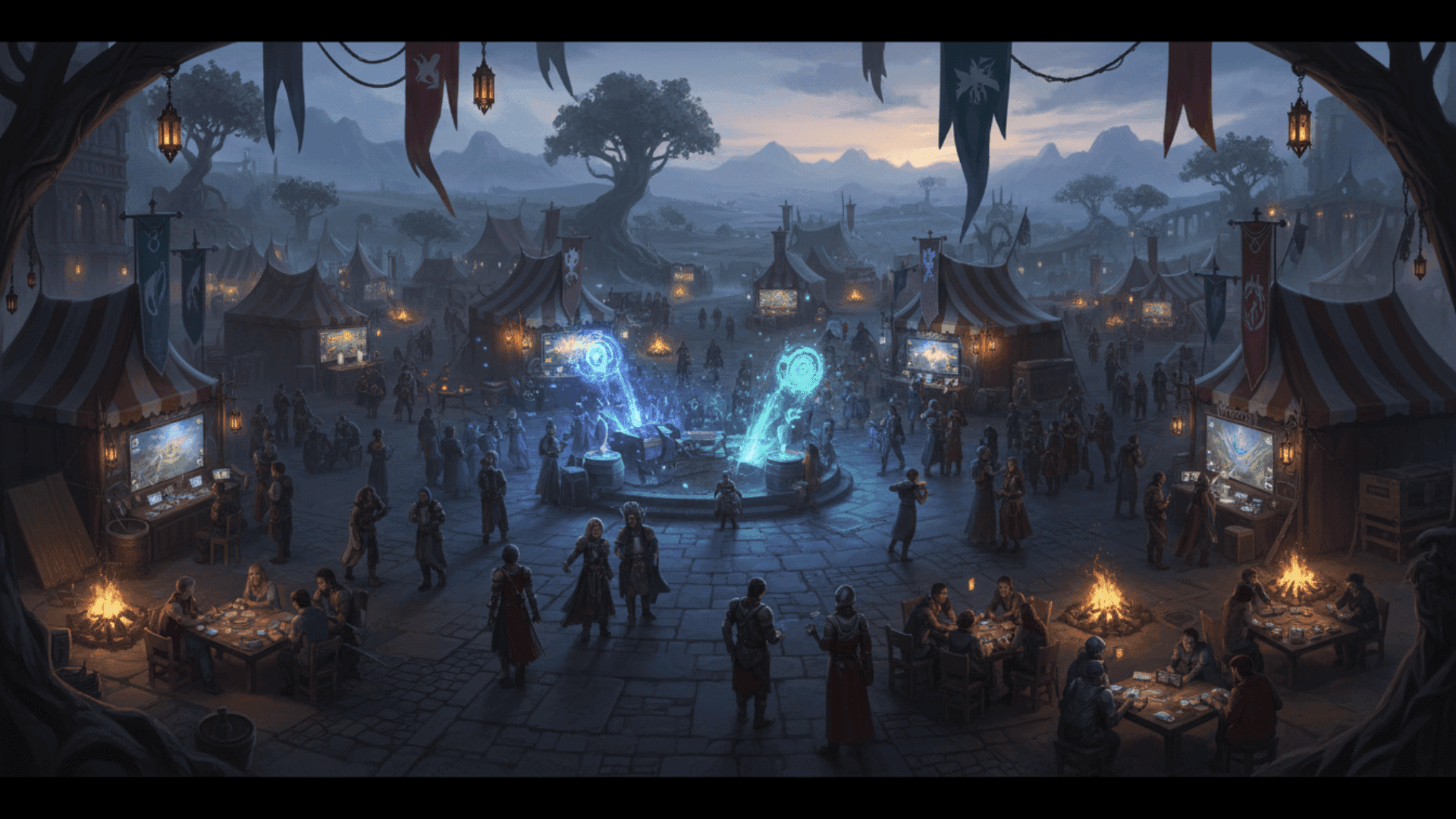
Steam festivals create moments of concentrated visibility. Traffic surges. Demo downloads rise. Wishlist numbers spike. For a brief period, participation feels amplified across the platform.
But amplification is not the same as alignment. Festival traffic reflects exposure within a crowded environment where curiosity is abundant and attention is fragmented. Players browse rapidly, sample widely, and evaluate quickly. What looks like momentum may simply be exploration compressed into a short timeframe.
Understanding the difference between interest and intent is essential. Visibility can introduce a game to thousands of players. Only behavior reveals whether those players are likely to stay.
This guide examines how to interpret Steam festival performance with discipline, how to distinguish curiosity from commitment, and why post-festival engagement matters more than event-week spikes.

Festival Clicks vs Player Commitment
Festival clicks measure attraction. Commitment measures continuation. A player clicking on a festival capsule signals initial relevance. It confirms that presentation, tags, and positioning are resonating enough to prompt exploration. Yet exploration is a low-threshold action. It requires seconds, not conviction.
Commitment appears later. It shows up in meaningful demo completion, wishlist follow-through, session depth, and return behavior after the event ends.
Steam festival visibility can generate large top-of-funnel movement. The key question is how much of that movement survives once browsing intensity declines. Clicks reflect awareness. Commitment reflects alignment.

Demo Curiosity and One-Time Visitors
Demos during festivals operate differently than standard releases. Players often download multiple demos in succession, comparing tone, mechanics, and pacing across titles.
This creates a sampling environment.
Some visitors engage deeply. Others launch briefly and exit within minutes. High download numbers can conceal shallow engagement. A demo that is widely installed but rarely completed may be attracting attention without generating conviction.
One-time visitors are not inherently negative. Festivals encourage experimentation. The signal emerges in distribution patterns. If a meaningful portion of players complete the demo, wishlist afterward, or return the next day, intent is forming. If most engagement compresses into a single short session, the traffic may be curiosity-driven. Volume alone does not clarify which dynamic is present.

Early Retention Signals During Festivals
Retention metrics during festivals require careful interpretation. Event traffic inflates participation temporarily, which can distort short term readings.
Instead of focusing on aggregate percentages, examine behavior among new cohorts acquired during the event. Do they return outside the festival window? Do they mirror the engagement patterns of pre-festival players? Does session depth stabilize or collapse once the promotional layer disappears?
Early retention signals are less about the initial spike and more about post-event normalization. Sustainable growth tends to show gradual stabilization above pre-festival baselines. Temporary excitement fades quickly. The difference becomes visible only after the event ends.

Why High Visibility Doesn’t Equal Demand
Festivals increase surface visibility across the storefront. Being featured, appearing in themed categories, or benefiting from event-driven traffic can significantly elevate impressions. Impressions, however, measure opportunity, not demand.
True demand expresses itself in progression depth, return frequency, and conversion behavior. A game can receive high exposure during festival periods yet fail to translate that exposure into durable engagement.
Visibility accelerates evaluation. It does not guarantee resonance. Demand becomes visible only when players choose to return after the novelty of browsing subsides.

Competitive Pressure Inside Steam Festival Pages
Players scroll through dozens of similar games within minutes. Direct comparison becomes immediate and unavoidable. Capsule clarity, genre signaling, and differentiation carry more weight than usual because attention cycles are shorter and competition is denser.
Performance during festival events must be interpreted within this competitive context. Moderate but stable engagement in a crowded category may signal stronger alignment than a larger spike within a less saturated segment. Relative positioning often matters more than absolute numbers. If you’re reading public spikes during festivals, Steam Charts and the Numbers That Don’t Tell the Full Story explains what those snapshots miss.

Behavior Patterns That Separate Winners From Noise
Several patterns tend to distinguish durable traction from temporary sampling:
Demo completion rates that remain consistent beyond day one
Wishlist additions that continue after the festival window
Return sessions occurring after event traffic subsides
Stable or improving session depth among new cohorts
Winners rarely rely on a single surge. Their engagement stabilizes. Noise spikes and vanishes.
The difference lies not in how high the curve rises during Steam festival visibility, but in how it behaves once competition normalizes.
What Steam Festival Metrics Miss on Their Own
Festival dashboards typically highlight downloads, wishlists, impressions, and peak participation. These figures are informative but incomplete.
They do not reveal progression friction within demos. They do not clarify whether wishlists convert at comparable rates post-event. They do not distinguish habitual players from experimental samplers.
Festival metrics describe activity during exposure. They rarely explain sustainability after it.
Interpreting festival performance requires layering lifecycle context, genre benchmarks, and cohort-level behavior rather than reacting to event-week aggregates alone. That layered approach is the core of Steam Game Analytics for Teams.
FAQ: Can Festival Exposure Predict Future Sales?
- Does strong festival performance guarantee launch success?
No. It signals visibility and initial resonance, not long-term demand.
- Are wishlist spikes during festivals reliable indicators?
They can be directional, but post-event conversion behavior determines durability.
- Should weak festival numbers trigger immediate repositioning?
Not necessarily. Category density, timing, and audience overlap all influence short-term exposure.
- How long should teams observe post-festival behavior?
Long enough to confirm whether new cohorts stabilize beyond the promotional window.
Connecting Festival Traffic to Real Player Behavior With Datahumble
Datahumble places Steam festival traffic alongside lifecycle benchmarks, comparable titles, and cohort engagement depth. Instead of reacting to temporary spikes, teams can examine whether post event behavior resembles sustainable growth or situational curiosity. The objective is not to celebrate visibility. It is to understand what visibility reveals.