

Pricing an indie game is not just a financial decision. It is a positioning choice that shapes perceived value, conversion rate, and long-term revenue. In 2026, as Steam becomes more competitive, steam game pricing works best when it is grounded in market context rather than instinct.
To reduce guesswork, many developers benchmark against comparable titles before committing to a final price point. Tools like Datahumble support this process by helping you assess genre medians, competitor price tiers, and positioning signals, so your pricing decision is based on evidence, not assumptions.
What you will learn in this guide:
- How the market is splitting between low-price saturation and premium positioning
- How to choose a launch discount without harming perceived value
- When regional pricing adjustments matter most
- How pricing psychology affects conversion
- How to validate your price with competitive benchmarks using Datahumble
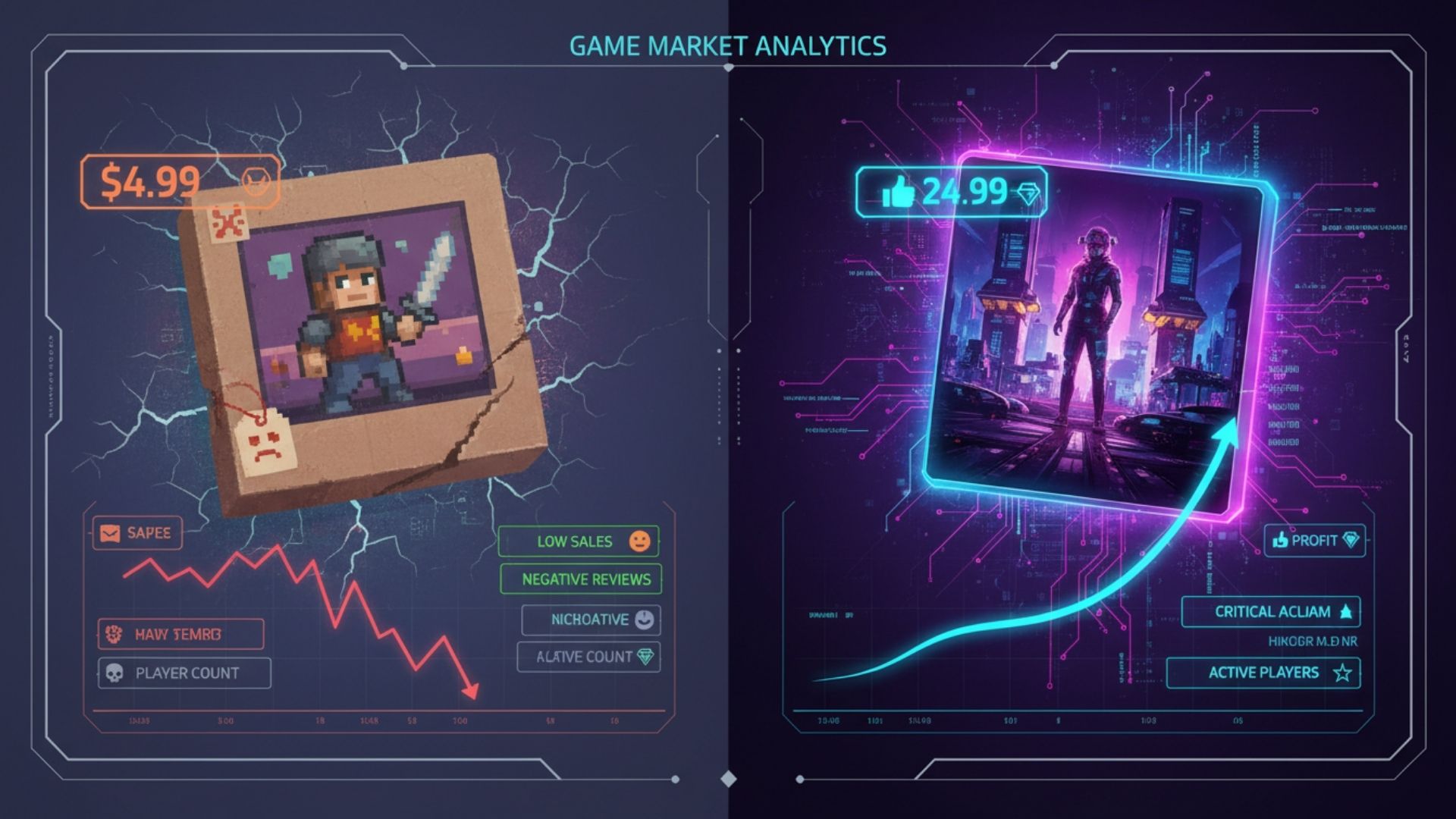
The Market Split: Low-Price Saturation vs Premium Indie
Indie pricing on Steam is increasingly polarized. One segment competes on low entry price, aiming for volume. Another segment competes on perceived value, relying on differentiation and stronger positioning.
The risk of pricing too low
Pricing below key thresholds, for example $9.99, can work in some genres, but it also carries tradeoffs. In crowded categories, very low pricing may signal limited depth or lower production value to some players. It can also reduce your flexibility later, because moving upward after launch is harder than discounting downward.
A safer way to think about it is this: if you choose an aggressive low price, you often need a clear supporting reason, such as short playtime, lightweight scope, or strong virality potential. Otherwise, you risk attracting the wrong audience and weakening long-term revenue.
The premium indie path
Premium indie positioning is not a guarantee of success, but it is increasingly common for games with distinctive art direction, deep mechanics, or high replayability. When the experience supports it, mid-range price points such as $19.99 or $24.99 can be viable. The key is alignment between the promise on your store page and what players actually get.
This is where steam game pricing becomes a messaging decision as much as a revenue decision. You are not only setting a number, you are signaling what kind of product this is.
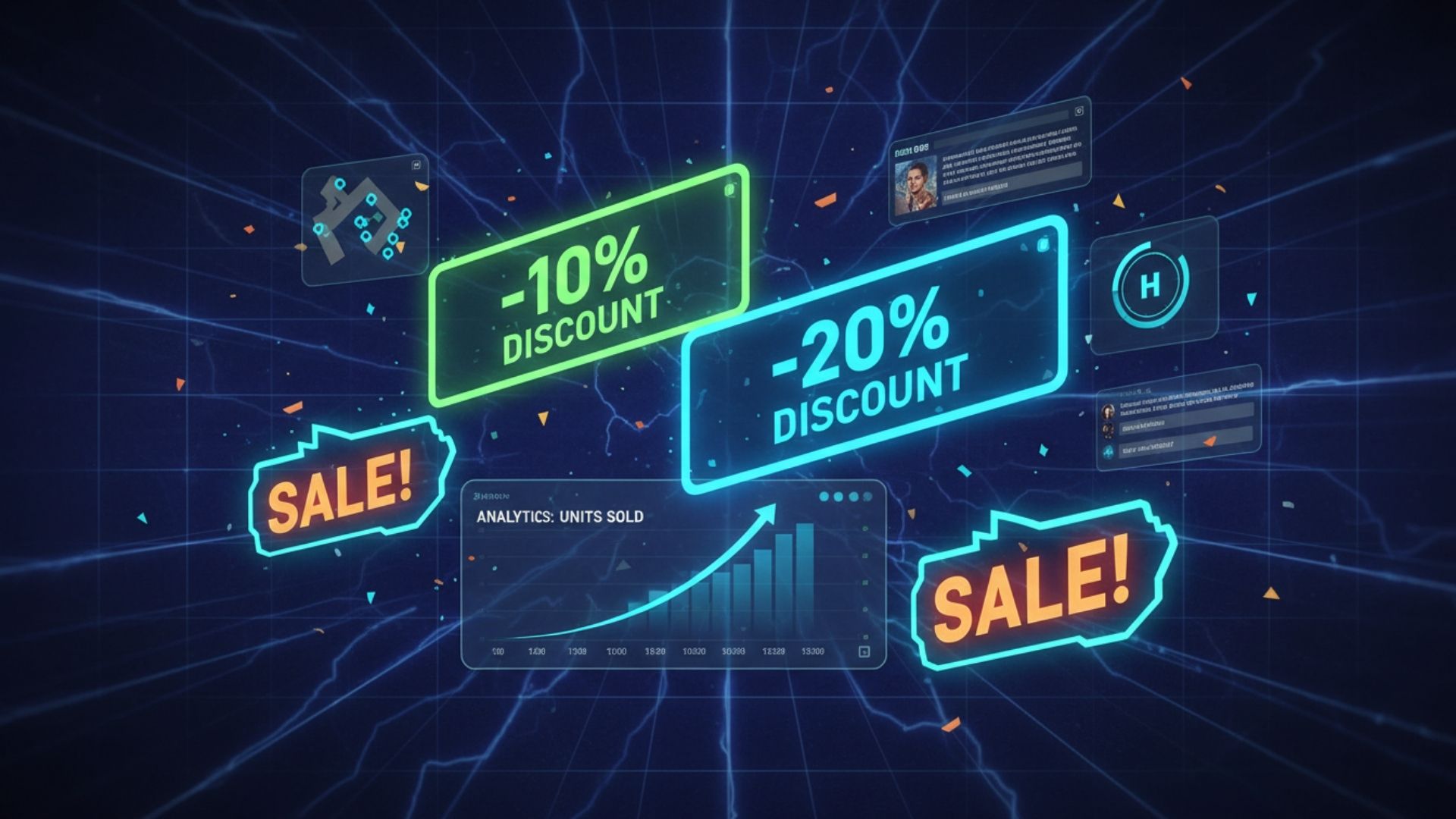
Launch Discount Strategy: 10% or 20%
A launch discount can help early momentum because it activates wishlist notifications and increases the likelihood of impulse purchases during launch week. However, the discount size also sets expectations about the game’s value over time.
A practical way to choose
A 10% discount is often used when you want to preserve a premium perception and communicate confidence. A 20% discount is often used when you are launching into a crowded week and want a stronger early push. Neither approach is universally better. The right choice depends on your genre, competitor calendar, and the amount of visibility you realistically expect to earn in the first days.
Instead of treating discount selection as a rule, treat it as a testable decision. If you can compare how similar games launched, including their discounts and price tiers, you can choose a discount that fits your positioning rather than copying a default.
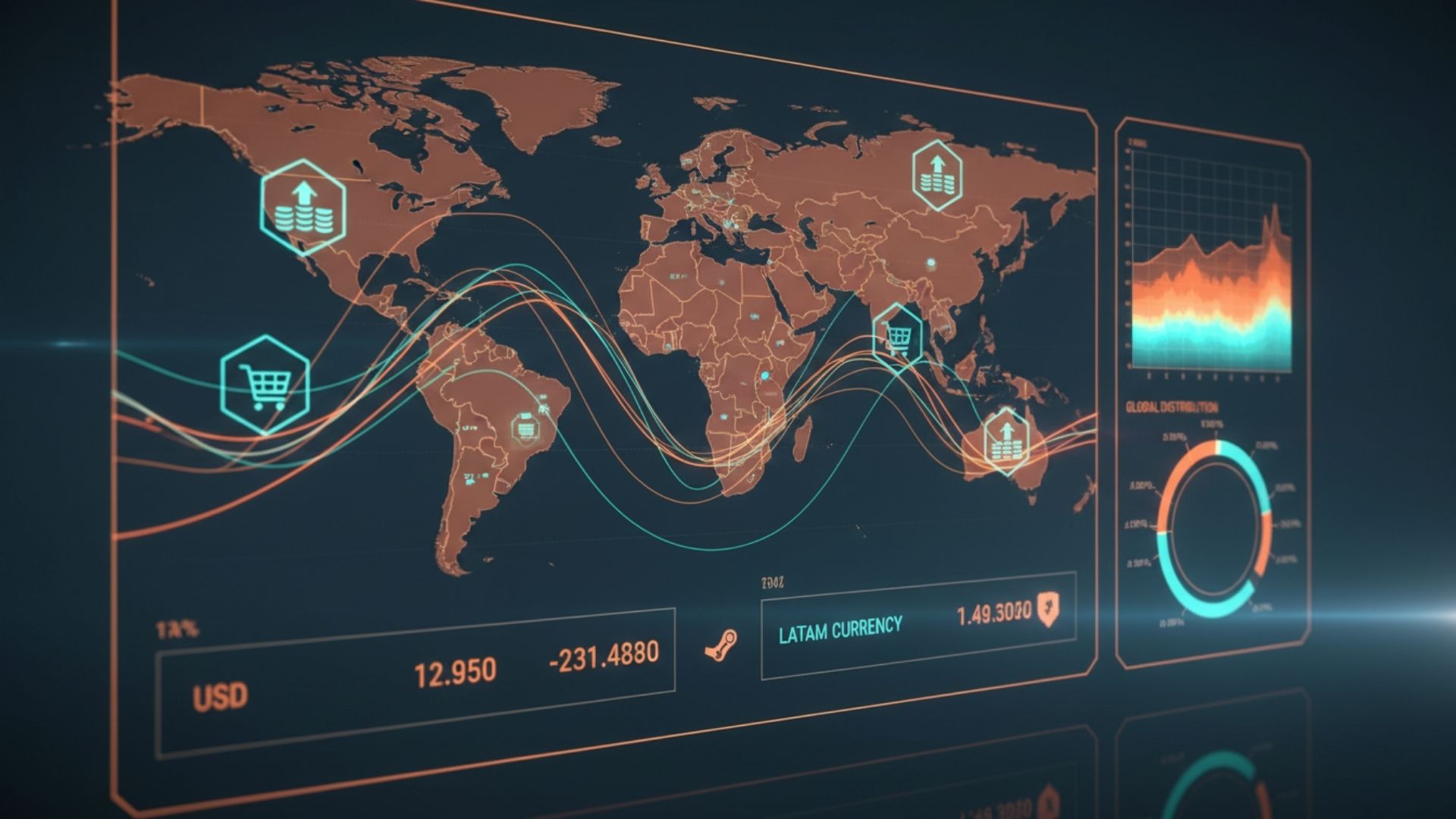
Regional Pricing: Avoiding “One Global Price” Mistakes
Steam’s global reach makes regional pricing a practical necessity, not an optional detail. Purchasing power differences mean the same USD price can land very differently across regions.
If you ignore regional adjustments, you can unintentionally price out large player bases in LATAM, MENA, and parts of South Asia. At the same time, poorly balanced regional pricing can increase gray-market risk. The goal is to find an accessible price range that still protects value.
This section is also where benchmarking helps. With market data, you can identify typical local price bands for comparable titles and set regional prices that support unit sales without eroding global positioning.

Psychological Pricing: How Players Perceive the Number
Pricing is not only economics, it is perception. One of the most consistently observed patterns is left-digit bias. Many players perceive $19.99 as meaningfully cheaper than $20.00, even when the difference is minimal.
Rounded prices can work for certain prestige-led products, but for most indie launches, charm pricing often reduces friction during quick comparisons. The goal is not gimmicks, it is clarity. If your price feels familiar and easy to process, players spend less time second-guessing the purchase.
Used thoughtfully, this becomes part of steam game pricing optimization. You are reducing checkout hesitation, not manufacturing value.
Datahumble Integration: How to Validate Your Price Before You Commit
Guesswork is risky in a saturated store. Before finalizing your price, you can validate it with competitive and category benchmarks.
With Datahumble, you can:
- Benchmark genre and tag medians to understand typical price tiers
- Compare similar games and observe how different price points map to performance patterns
- Use competitive snapshots to sanity-check whether your price aligns with your positioning
- This is especially useful when you are deciding between two close tiers, such as $14.99 vs $19.99, or when you are unsure whether your game can credibly sit in a premium bracket.
A simple rule of thumb is to let the market narrow your options, then let your product identity choose the final number. This approach keeps steam game pricing grounded while still respecting creative intent.
Steam is crowded, but that does not mean price should always race downward. Pricing is a strategic lever that affects conversion, reviews, regional performance, and long-term sustainability. If you treat pricing as a positioning decision and validate it against comparable titles, you reduce launch risk and increase the odds of building momentum that lasts past week one.
If you want to benchmark your niche quickly, Datahumble can help you compare competing titles, price tiers, and category medians, so your next pricing decision is based on data, not noise.