

Discounts on Steam are rarely just marketing decisions. They are mathematical trade offs between visibility, perception, and long term revenue health. Many teams apply discounts hoping for spikes in sales, but without understanding how those spikes translate into net profit, the outcome often disappoints. A steam sales calculator helps frame these decisions realistically, but only when it is used to test assumptions rather than justify optimism.
This guide explores the mechanics behind Steam discounts, how price cuts affect behavior, and how to evaluate whether a sale actually strengthens your game’s revenue trajectory or simply accelerates decline.
Optimal Discount % for Launch
Launch discounts are often seen as a shortcut to visibility. In practice, they are a signal setting moment.
Small discounts may fail to register in player perception, while aggressive cuts can anchor long term value lower than intended. The optimal launch discount is rarely about maximizing unit sales in the opening window. It is about balancing early momentum with sustainable price positioning.
A steam sales calculator becomes useful here by modeling discount scenarios against realistic conversion and refund behavior. The goal is not to identify a perfect percentage, but to understand how sensitive revenue is to price movement at launch.

Seasonal Sale ROI: Winter vs Summer Dynamics
Not all seasonal sales behave the same way. Winter sales often concentrate higher intent buyers, while summer sales tend to attract broader, more exploratory audiences.
This difference affects refund rates, session depth, and post sale retention. A strong sales spike during a seasonal event does not automatically indicate healthy ROI. What matters is how much demand remains once the sale ends.
Evaluating seasonal performance requires looking beyond gross revenue. Comparing baseline recovery after different events helps teams understand whether a sale is expanding the audience or simply compressing demand into a shorter window.
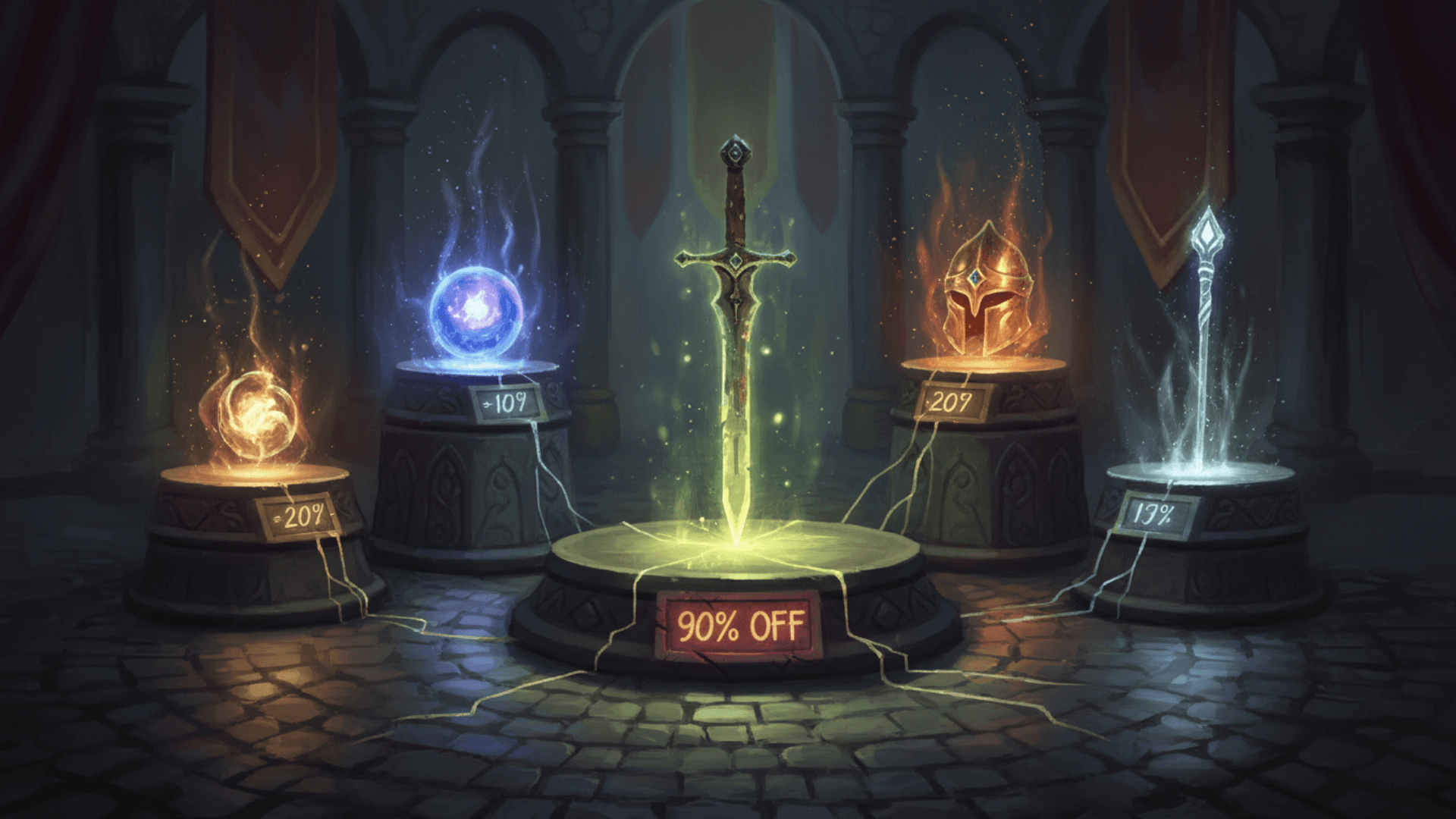
Discount Psychology: When Too Low Looks Cheap
Discounting is not neutral. It reshapes perception.
Prices that drop too aggressively can signal low confidence or limited depth, especially for premium or narrative driven titles. Players often interpret steep discounts less as an invitation and more as a signal about confidence or depth.
Behaviorally, overly deep discounts may increase short term volume while reducing perceived value, leading to weaker engagement and higher refund risk. The psychological cost of discounting is harder to measure, but its effects often surface in retention patterns after the sale period ends.

Revenue Drop vs Spike Balance
Sales spikes are visible. Revenue drops afterward are quieter, but often more important. A successful discount does not only create a spike.It allows revenue to stabilize at a higher baseline than before. When post sale revenue falls below the original trend line, the discount may have cannibalized future earnings rather than grown them.
Using a steam sales calculator to compare pre sale, sale, and post sale performance helps teams identify whether a discount creates durable lift or temporary noise. The balance between spike and recovery is where real insight lives.

Forecasting Sale Outcomes With Datahumble
Forecasting does not eliminate uncertainty, but it clarifies risk. Datahumble supports sale planning by layering historical pricing behavior, category benchmarks, and engagement signals into revenue scenariosInstead of predicting a single outcome, teams can explore how discount depth, timing, and audience mix reshape potential results.
This approach shifts discount planning from intuition driven decisions to informed scenario analysis, helping teams understand trade offs before committing to a sale window.

Bundles and DLC Upsell Math
Bundles and DLC introduce a different pricing logic. Their value lies less in discount depth and more in perceived completeness.
Bundles often convert players who are already engaged, while DLC upsells depend on timing and progression alignment. Discounting base games without considering downstream DLC impact can distort lifetime value calculations.
Evaluating bundle and DLC strategies requires modeling total player value, not just entry price. Revenue math becomes more accurate when initial discounts are viewed as part of a broader monetization structure rather than isolated events.
FAQ: When to Discount? When Not To?
- Should discounts follow player count drops?
Not automatically. Declines may reflect lifecycle progression rather than pricing issues.
- Is frequent discounting harmful?
It can be. Repeated discounts may train players to wait, weakening full price conversion over time.
- Do discounts always increase visibility?
Only in the right context. Visibility without expectation alignment rarely leads to lasting engagement.
Reading Sale Math Before Acting on It
Discounts change more than price. They reshape expectations, behavior, and long term revenue patterns. A steam sales calculator helps surface these dynamics, but interpretation is what turns calculations into strategy.
Teams that understand the math behind discounts tend to plan sales as structural decisions rather than reactive tactics. Revenue planning becomes more resilient when it accounts for behavior, perception, and timing together.
Datahumble helps teams evaluate discount scenarios within a broader market and behavioral context, turning sale math into clearer, more confident decisions.